

Most food brands focus solely on selling standalone products, but customers actually buy use cases, flavors, and dinnertime solutions.
Recipe marketing bridges this gap by turning raw ingredients into tangible, crave-worthy meals.
You can transform your storefront into an inspiring culinary resource and get sustainable organic traffic that boost direct store conversions.
What is recipe marketing?
Recipe marketing is a content strategy where food brands create, publish, and distribute culinary recipes that feature their specific food products as key ingredients. Shopify stores use the KL - Recipe Studio app to create beautiful, shoppable recipes in their store.
Instead of just selling the ingredients, you offer step-by-step culinary guides to customers so that they can make a dish out of it. For example, if you’re selling cheese online, create a few recipes that customers can make using cheese.
Benefits of recipe marketing for online food brands
In direct-to-customer businesses, selling the food products directly is often a challenge. Recipe marketing helps businesses with these benefits:
- Increased organic traffic: Shoppers frequently search for cooking queries like “easy butter chicken recipe.” Publishing SEO-optimized recipe blog posts allows you to capture high-intent search traffic and attract buyers who may not yet know your brand.
- Trust & authority building: When you teach customers how to prepare delicious meals, you establish culinary authority. Detailed measurements, troubleshooting tips, and cooking temperatures demonstrate that your brand genuinely understands taste, quality, and home cooking.
- Drive product visibility: Customers browsing a recipe organically discover items they might otherwise overlook in your main catalog.
- Improve conversion rate: Context drives sales. Showing exactly how a condiment balances a dish eliminates customer hesitation about how to use an unfamiliar item, significantly lifting conversion rates.
Types of recipes you can create
Offering varied recipe formats helps cater to different skill levels, busy schedules, and dietary lifestyles.
- Quick Recipes (Under 15 Minutes): Ideal for busy professionals and parents looking for fast weeknight fixes. Example: A 10-minute chili-garlic ramen using your signature hot oil and noodle broth concentrate.
- Ingredient-Focused Recipes: Designed to spotlight your hero food products front and center. Example: A smoked paprika roasted chicken where your single-origin spice rub forms the foundation of the marinade.
- Seasonal & Trending Recipes: Capitalize on peak search volume, viral cooking formats, or holiday meal planning. Example: Spiced pumpkin soup in the autumn featuring your proprietary pumpkin pie spice blend.
- Beginner-Friendly Recipes: Simple dishes with foolproof steps and minimal cleanup to build cooking confidence. Example: A 3-ingredient sheet-pan salmon paired with your bottled citrus marinade.
- Diet-Specific Recipes: Formats tailored to specific lifestyles like vegan, keto, low-sodium, or gluten-free. Example: Dairy-free cashew Alfredo pasta showcasing your organic raw cashews and nutritional yeast.
How to create high-quality recipe posts in Shopify?
In Shopify, you need to install a third-party app to generate recipe posts. KL - Recipe Studio helps you create beautiful, SEO-friendly recipes within minutes. It also features AI-powered features to help you easily create more content in less time.
First, install the app from the Shopify app store. Once installed, complete the quick onboarding steps:
- Choose a specific blog for adding recipes
- Add the app block to your store theme to display recipes
Now, in the app dashboard, you’ll find three options to create a new recipe: create manually, generate with AI, or import from the web. For example, I asked the AI to generate a recipe for high-protein peanut cookies.
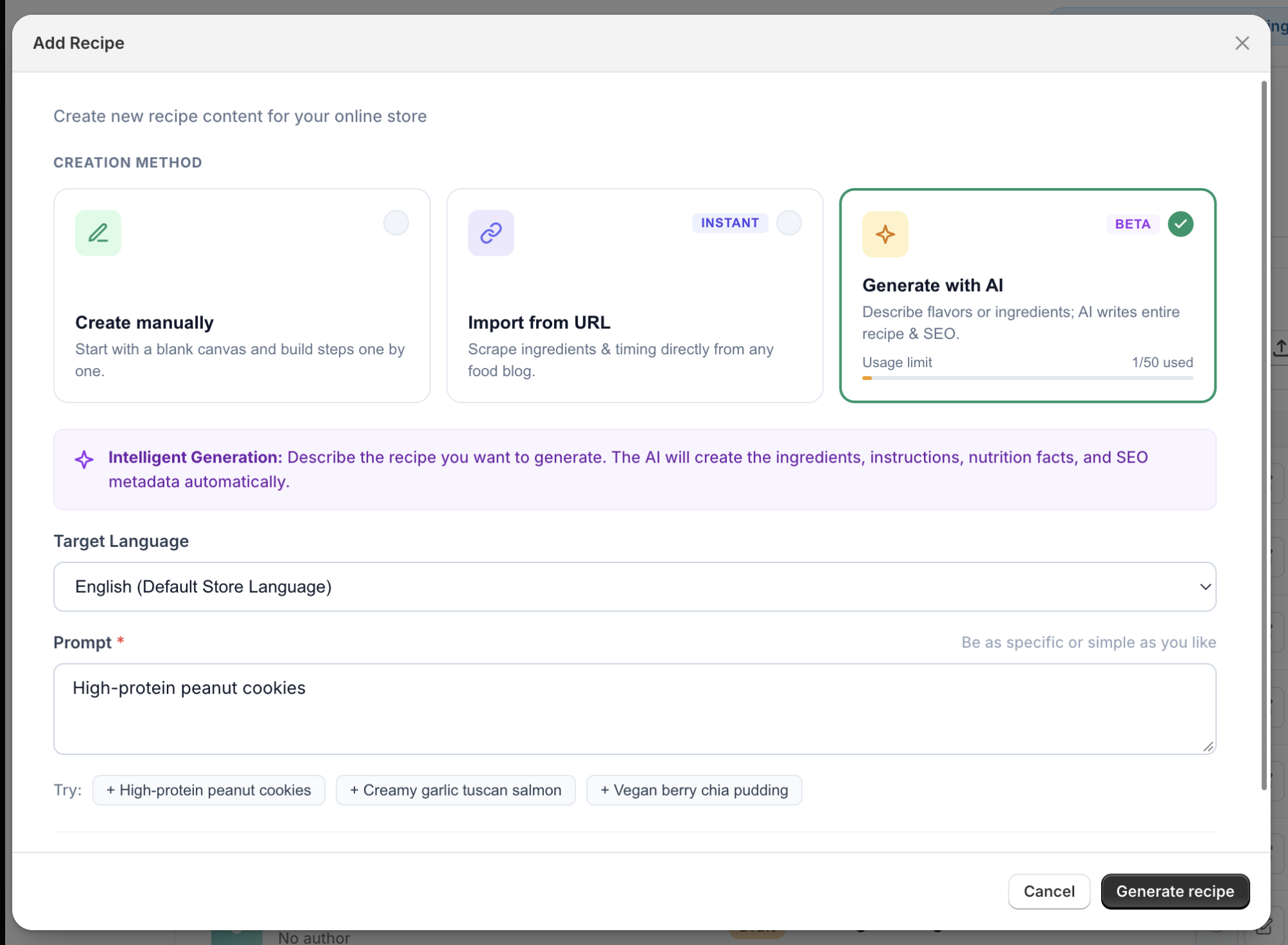
In a few seconds, the AI generates a full recipe including the title, description, ingredients, and step-by-step instructions.
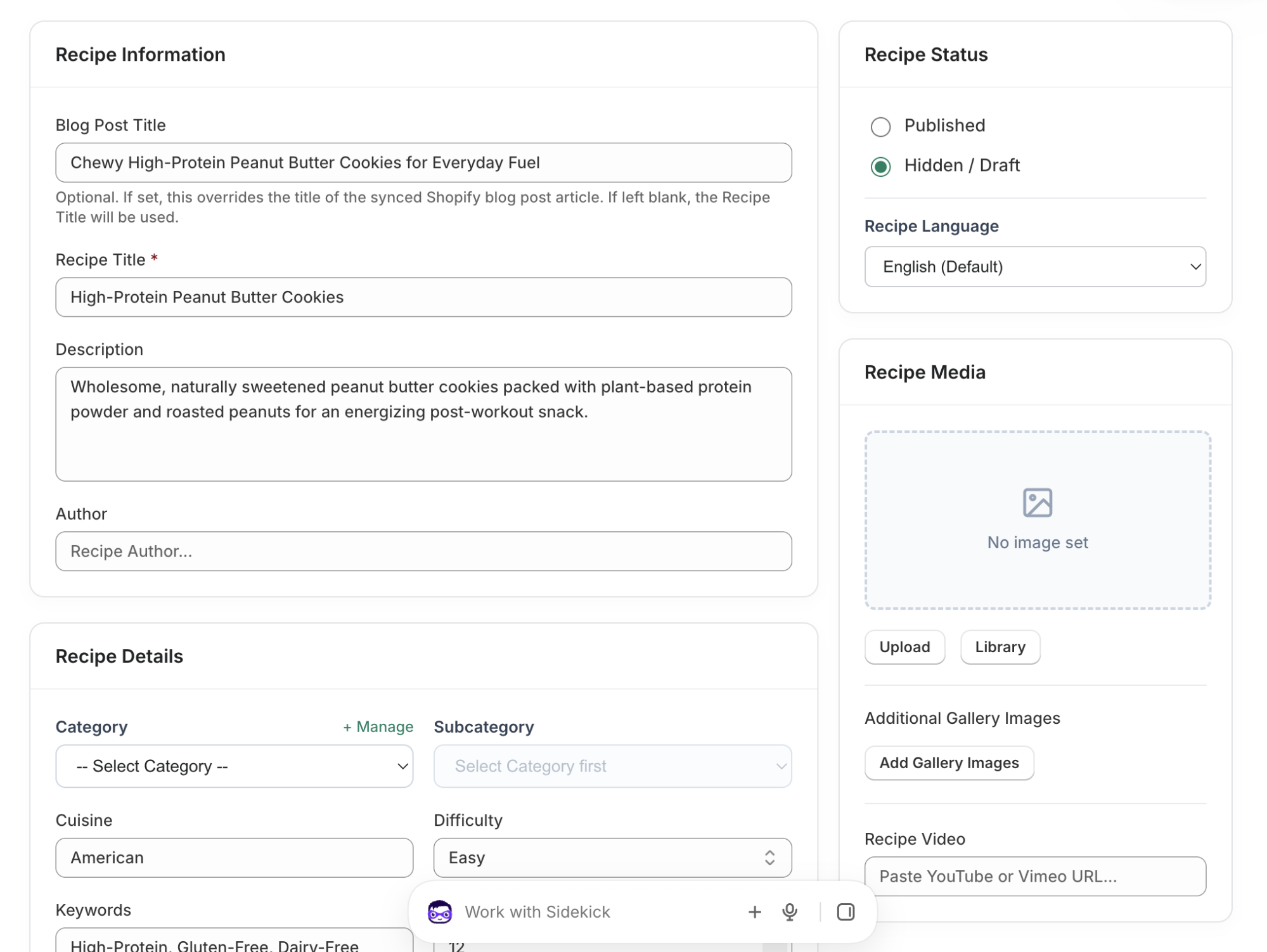
You can edit the recipe content, add media files, and make other changes as needed and publish the recipe. The app also supports linking ingredients to specific products or pages so that customers can easily add those ingredients to carts right from the recipe pages.
For example, here’s what the recipe page looks like on the front end.
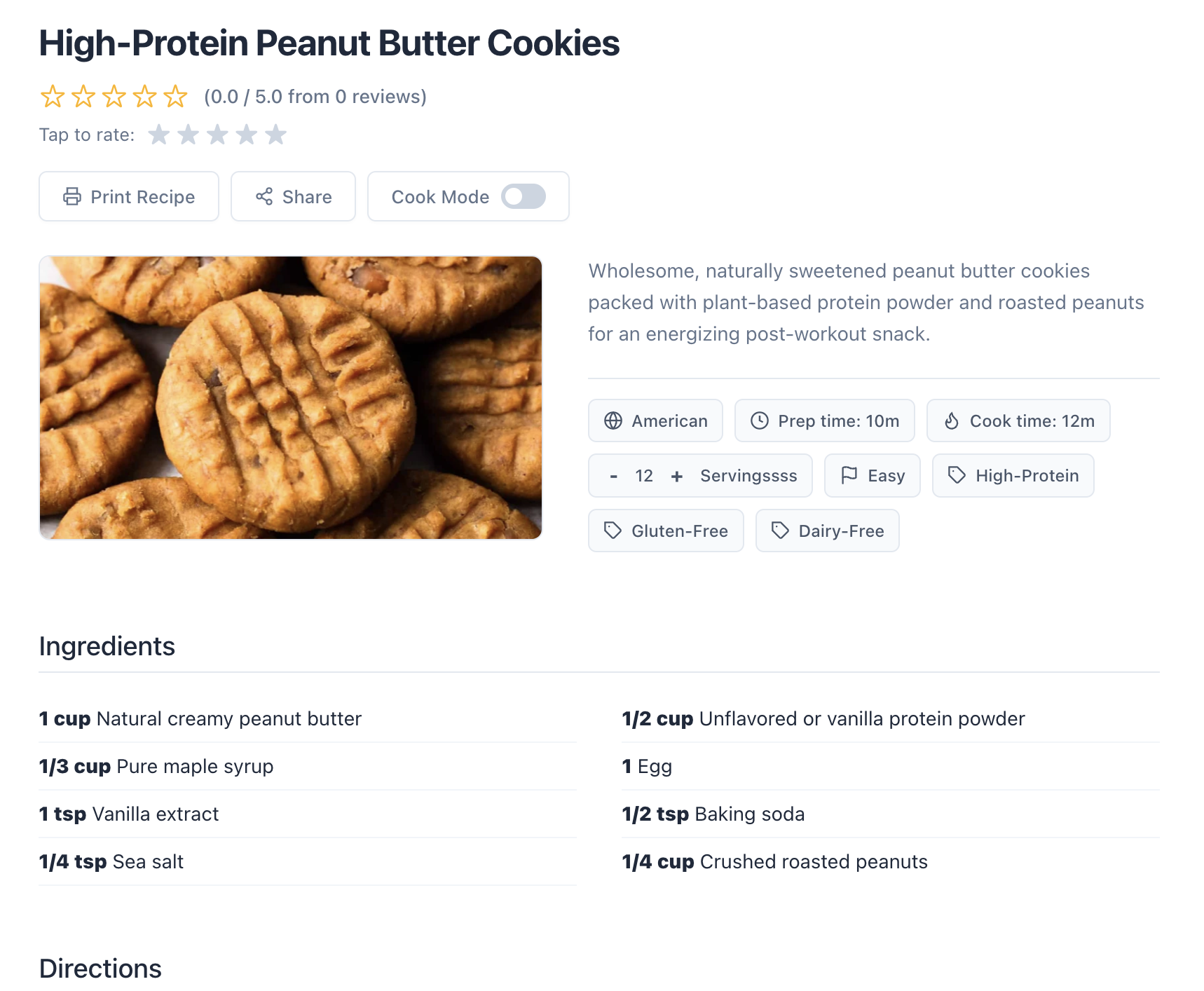
Every recipe page automatically generates structured schema markup, boosting visibility on search engines via rich recipe cards.
The app also offers detailed analytics of recipe views, clicks, and add-to-cart counts so that you can analyze performance and optimize your strategy.
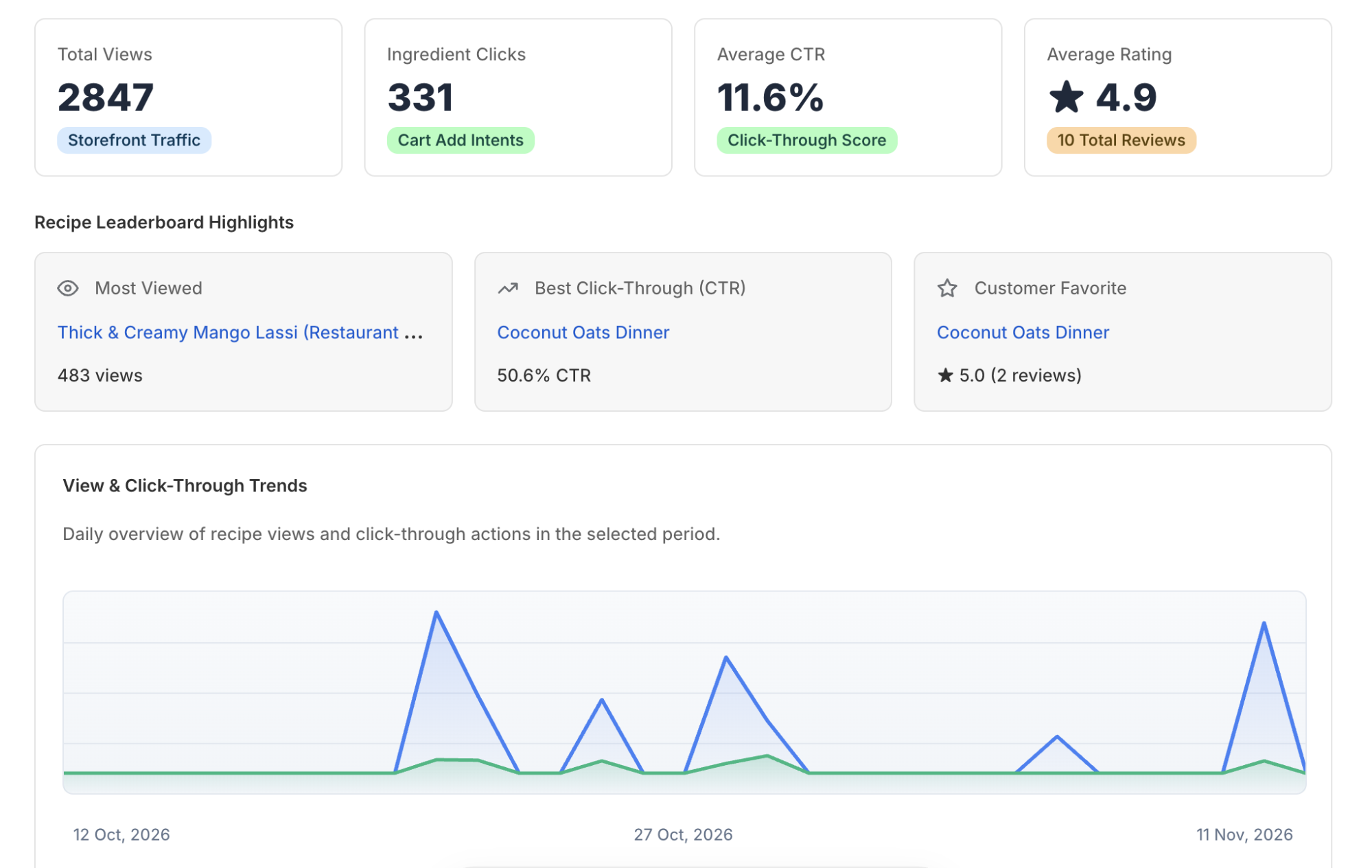
In addition to the AI feature, you can also use the import option in the app to directly import recipes from supported websites. The KL - Recipe Studio app for Shopify is designed to help merchants quickly generate recipe content without spending hours doing it manually.
SEO tips for recipe marketing
To ensure your recipes capture high-intent search traffic on Google, apply these technical and on-page optimization practices:
Long-tail keywords
Instead of targeting ultra-competitive terms like “pasta sauce,” optimize recipe blog posts for descriptive, long-tail phrases such as “spicy arrabbiata pasta sauce for weeknight dinner” or “gluten-free marinara recipe.” These queries have clear purchase and cooking intent, making them easier to rank for. Check out our guide on finding keywords for recipe posts for detailed research workflows.
Schema markup
Structured data (Recipe JSON-LD schema) is essential. It enables search engines to display rich snippets directly in Google search results—showing your preparation time, star ratings, calorie counts, and thumbnail photos. Apps like KL - Recipe Studio inject this markup automatically.
Internal linking
Connect your content ecosystem. Link directly from your recipe's ingredient list to the corresponding product pages, and embed links to related recipes within the body copy. Conversely, add links on your product pages pointing back to these recipe ideas to help prospective buyers see the product in action.
Publish consistently
Search engines reward fresh, relevant content. Establish a consistent publishing schedule—such as two new recipes per week—to steadily build topical authority across your food category and keep returning shoppers engaged.
Other ways to promote recipe content
Publishing your recipe is just the first step. Multi-channel distribution helps you maximize return on investment:
- Create Short Videos: Repurpose your recipes into 30-60 second vertical videos for Instagram Reels, TikTok, and YouTube Shorts. Show quick sizzles, ingredient close-ups, and the final plated dish, directing viewers to the link in your bio for the full shoppable recipe card.
- Distribute Hard Copies: Include beautifully printed recipe cards inside your shipping packages. When a customer receives their order, an enclosed recipe card provides instant inspiration for using their new items right out of the box.
- Recipe Newsletter: Send out a dedicated weekly dinner or weekend brunch newsletter. Feature one seasonal dish, break down the ingredient list, and link directly back to your Shopify store for effortless ordering.
Frequently asked questions
Can I reuse the same recipe content across platforms?
Yes. You can adapt a single recipe into a long-form Shopify blog post, a short-form video script for social media, an email newsletter, and an unboxing recipe card. Just ensure the written version on your website serves as the primary, canonical home for SEO value.
Do recipes actually increase product sales?
Yes. Recipes eliminate customer hesitation by providing clear instructions and serving inspiration. When paired with one-click add-to-cart buttons directly on the ingredient list, shoppable recipes significantly shorten the path from inspiration to checkout.
What types of food brands benefit the most from recipe marketing?
Brands selling foundational cooking ingredients, spices, seasoning blends, olive oils, sauces, baking mixes, raw condiments, and specialty pantry items experience the strongest return from recipe marketing, as their items naturally require preparation.
Can AI-generated recipes be used for marketing?
AI can help brainstorm flavor pairings and draft initial copy, but all recipes must be physically kitchen-tested before publishing. Inaccurate measurements or poor flavor outcomes will damage brand trust and lead to negative customer reviews.
Grow your food business with recipes
Modern food marketing is no longer just about showing pretty bottles and packaging—it is about delivering mealtime solutions. By turning your storefront into a vibrant hub of culinary inspiration, you attract high-intent organic shoppers, educate them on using your catalog, and simplify the buying journey. Start publishing optimized, shoppable recipes today to transform casual visitors into long-term culinary fans.