
Looking for apps to display nutrition / supplement facts in Shopify? Merchants selling food or supplements face a challenge: providing clear, accurate nutrition data. In this guide, we compare the top-rated Shopify nutrition facts apps to help you comply, improve your store's aesthetic, and build trust with customers.
What are nutrition facts?
Nutrition facts are standardized labels that provide a detailed breakdown of a product’s nutrient content. They typically include serving sizes, calorie counts, and quantities of macronutrients like fats, proteins, and carbohydrates, as well as essential vitamins and minerals.
For merchants, these labels are more than just a list of ingredients; they are a legal requirement in many jurisdictions (such as FDA in the US or FSANZ in Australia) and a vital tool for SEO, as structured nutrition data can help products appear in specific health-related searches.
Comparison of Shopify nutrition facts apps
| App name | Pricing | User ratings | Key features |
|---|---|---|---|
| KL Nutrition Facts Labels | $4.99/mo | 5/5 |
|
| It's Got: Nutrition Facts | Starts at $8/mo | 4.5/5 |
|
| Product Details & Facts Pro | Starts at $9/mo | 5/5 |
|
1. KL Nutrition Facts Labels
- Developed by: Krivalabs
- Ratings: 5/5
- Pricing: $4.99/mo (Unlimited labels)
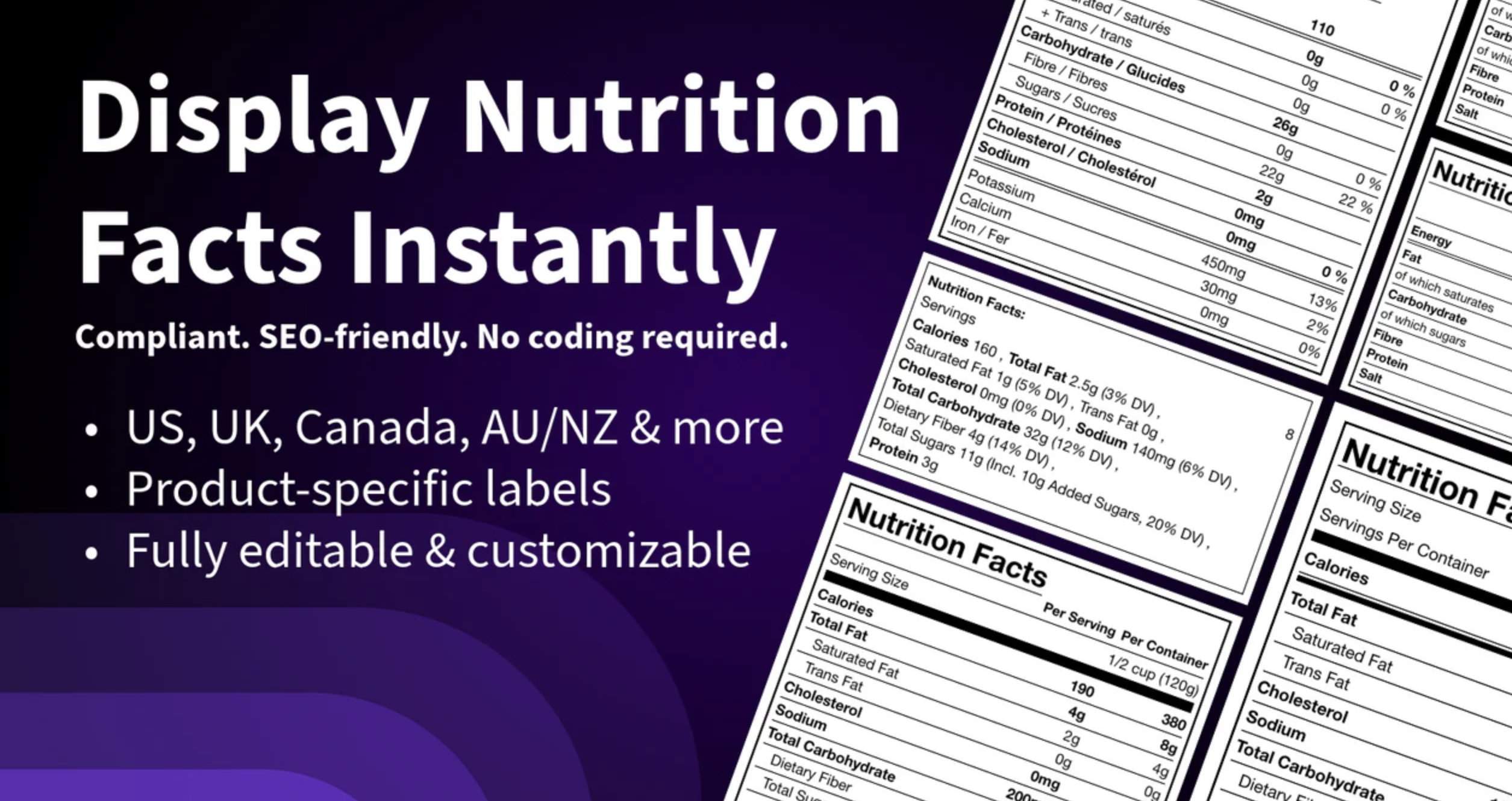
This app offers Shopify-native interface to create, manage, and assign nutrition facts labels to products. You can create and add the nutrition labels to products in three easy steps. It offers various food label templates like US, UK, AUNZ, and more to create legally compliant labels as per your region.
In addition to ease of use, the HTML-based labels are easily accessible to search engine crawlers, making it SEO-friendly. You can choose to display the labels directly, in accordion (expand/collapse) or in a popup modal on the product page.
Get FDA & EU Compliant
Try KL Nutrition Facts →2. It's Got: Nutrition Facts
- Developed by: ScreenStaring
- Ratings: 4.8/5
- Pricing: $8/mo (500 labels only)
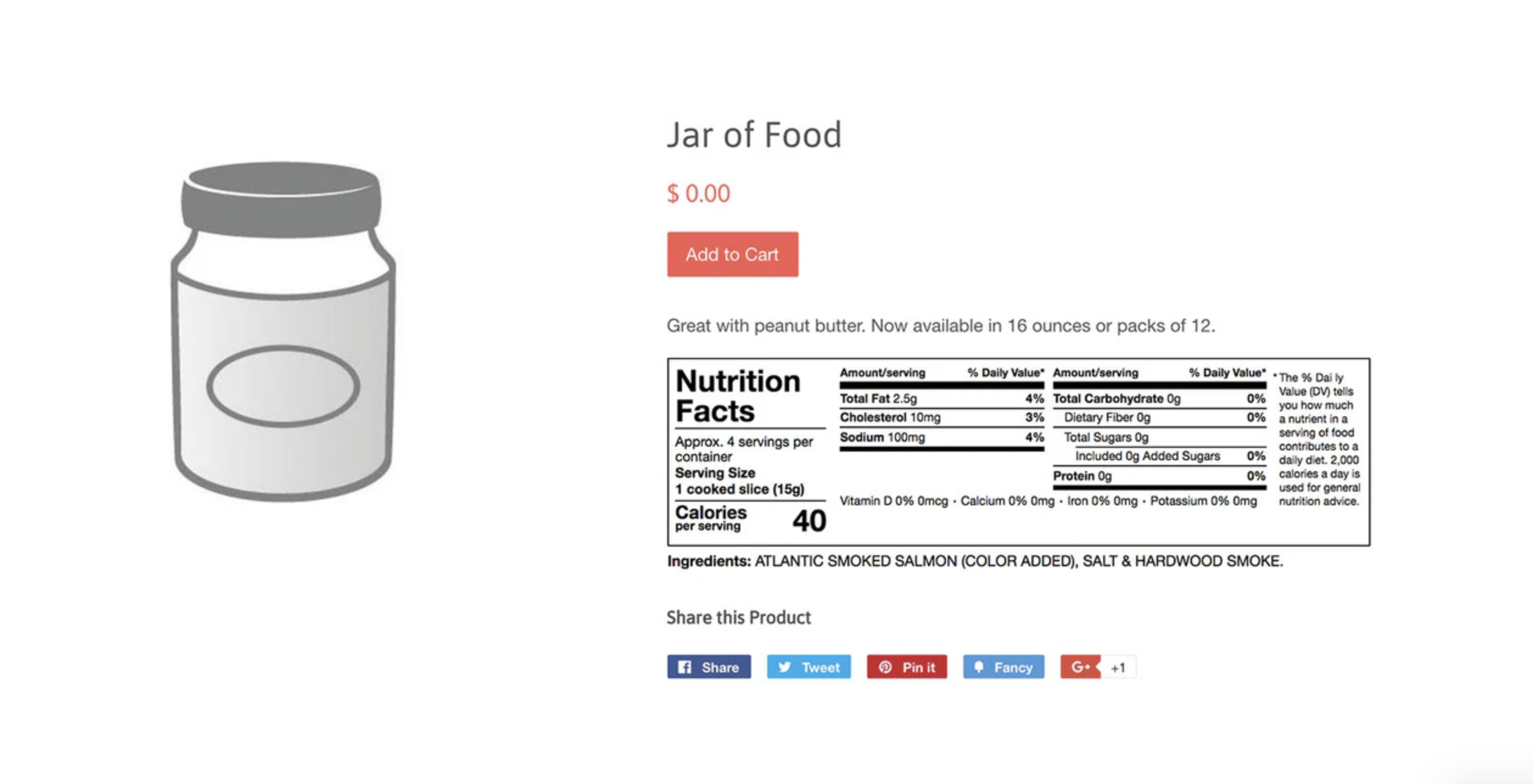
The app offers powerful interface to generate and add labels to Shopify products. You get plenty of template types for product nutrition labels. You also get customization options to make the labels look “good” with your store theme.
Personally, the reason we put this app in the second position is that it does not offer Shopify-native interface for creating labels. This means, it could be a bit difficult to use for many users.
3. Product Details & Facts Pro
- Developed by: FreshForAll
- Ratings: 5/5
- Pricing: $9/mo
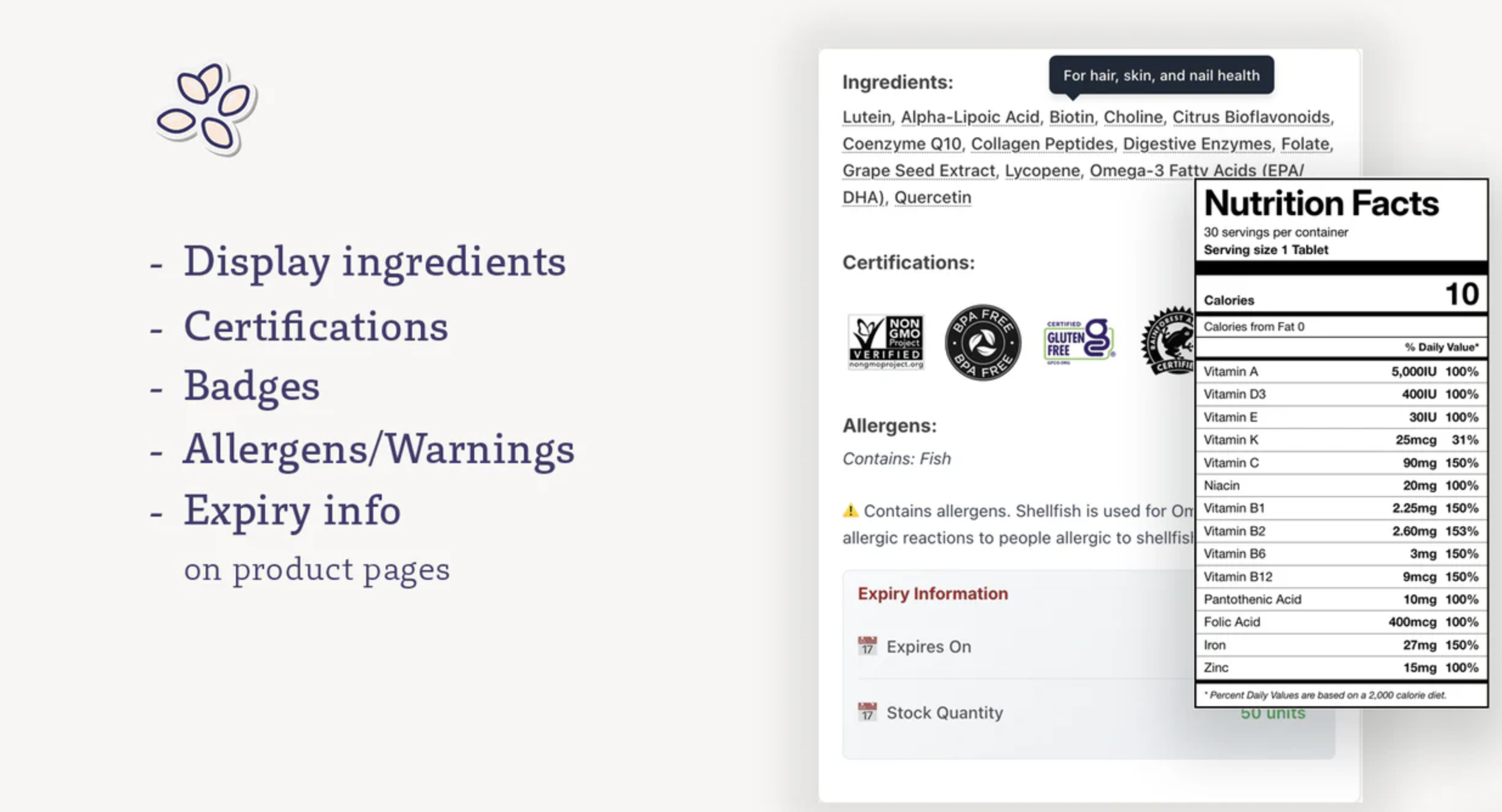
This simple app allows you to easily add simple nutrition facts labels to product pages, including ingredient lists, custom tabs, and expiration dates. It also offers additional certifications and badges that might be useful for food and supplement brands.
Considerations for adding nutrition facts in Shopify
If you’re planning to add nutrition facts, ingredients, and other info to your product pages, consider these factors:
- HTML-based labels: Nutrition facts labels should be created using HTML rather than images. This ensures the content is SEO-friendly, easily readable by search engines, and accessible to users relying on screen readers.
- Mobile responsiveness: All nutrition and ingredient details should be fully responsive and easy to read on mobile devices. Make sure text scales properly, tables adjust to smaller screens, and the layout remains user-friendly across all devices.
- Monthly fees: Consider the ongoing costs of apps or tools and ensure they are sustainable for your business over time, especially if your product range grows.
- Legal compliance: Ensure your nutrition labels meet the regulatory requirements of the regions where you sell your products. This may include proper formatting, accurate serving sizes, allergen declarations, and adherence to local food labeling laws.
FAQs
Are nutrition facts mandatory for Shopify products?
In many regions, yes. If you sell packaged food or supplements in the US, Canada, or the EU, specific labeling is legally required.
Which nutrition facts label format should I use?
This depends entirely on where you are selling. A US-based store should follow FDA guidelines, while those in Australia or New Zealand must follow FSANZ.
What is the difference between HTML vs image-based nutrition labels?
HTML labels (like those in KL Nutrition Facts) are "live" text. They are better for SEO because search engines can read the content, and they are essential for accessibility. Image-based labels are static files, which are not readable by search engines.
Finally, which is the best app?
The "best" app depends on your scale. If you are a growing merchant looking for the best value, high technical compliance, and accessibility, KL Nutrition Facts Labels is the top contender at $4.99/mo.
Related reading
Recommended for you